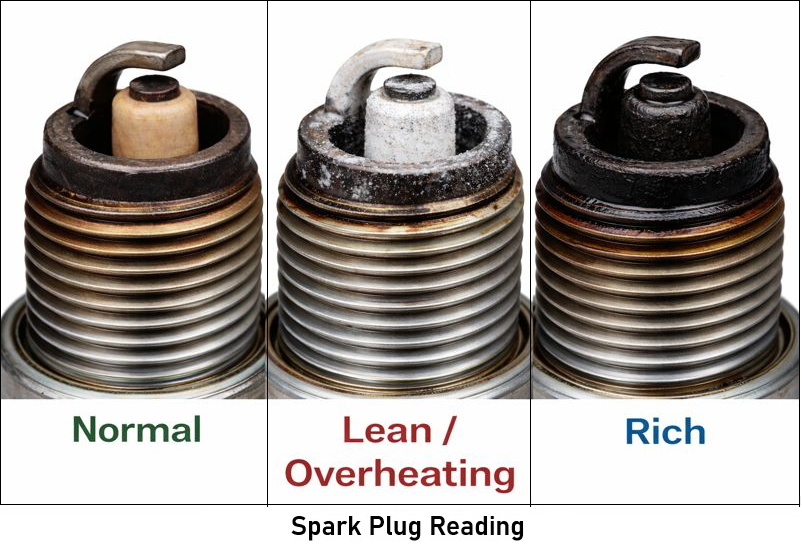
To accurately read a new spark plug for engine condition, you need to run the engine long enough for the plug to show current operating behavior—not old residue from used plugs.
While not a comprehensive guide, this article highlights the basics and provides a solid starting point. There are many spark plug readings that fall on either side of lean, normal, and rich, but this piece focuses on the three key conditions. Two-stroke and four-stroke engines differ slightly in plug readings, though the fundamentals remain largely the same.
Plug Chop : Some prefer this method so we’ll outline it here. Use the vehicle at a steady, specific throttle position (typically your normal rpm where you have concern) for about 30-60 seconds or a mile. Hit the kill switch, and close the throttle. This prevents the engine from idling or decelerating, which would “taint” the plug color with a different air-fuel ratio.
2-Stroke Engines (carb or EFI, oil-injected or premix) Spark Plug Reading
How long to run:
-
5–10 minutes is usually enough
-
Include load (on the water or under throttle)
-
Avoid long idle time before shutdown
Best method (most accurate):
-
Warm engine fully
-
Run at the RPM range you want to read (cruise or WOT)
-
Kill the engine under load (plug chop)
-
Pull plugs immediately
What to look for:
-
Porcelain should be light tan / light coffee
-
Slight oil film is normal
-
Heavy wet oil → too rich or excess oil
-
Ashy or grayish-white in color. → lean or overheating (There will be very little to no carbon buildup)
Notes:
-
2-strokes show condition very quickly
-
Long idling will darken plugs and give false “rich” readings
-
Oil type and ratio affect color
4-Stroke Engines Spark Plug Reading
How long to run:
-
10–20 minutes minimum
-
Must reach full operating temperature
-
Normal driving/load is fine
Best method:
-
Drive normally or hold target RPM
-
Shut engine off without extended idle
-
Remove plugs while warm
What to look for:
-
Light tan / gray → normal
-
Dry black soot → rich or weak spark
-
White or blistered → lean / hot (There will be very little to no carbon buildup)
-
Oily deposits → valve seals or rings
Notes:
-
4-strokes take longer to show changes
-
Plug color is less affected by oil than 2-strokes
-
Short runs can give misleading results
There are many shades and gradients between the three main spark plug readings—lean, normal, and rich—but these examples offer a clear reference for each major condition as a starting point for investigation, making it easier to assess overall engine health.